
The Skinny Jab That Ate America
The fitness industry has spent decades peddling misery wrapped in motivational slogans.
Eat less. Move more. Count every calorie. Track every macro. Meal prep chicken until your soul feels like a dry rotisserie carcass under a gas station heat lamp.
Then GLP-1 drugs arrived and people started dropping 30, 50, even 100 pounds while barely thinking about food. The fitness world promptly lost its mind.
Half the gurus hailed them as the greatest medical breakthrough since penicillin. The other half branded users as lazy cheaters violating the sacred laws of Mount Bro-lympus.
As usual, the truth is a lot more interesting than either side wants to admit.
From Diabetes Drug to Weight-Loss Phenomenon
These drugs weren’t invented to help people fit into skinny jeans.
They were developed to treat Type 2 diabetes by improving insulin secretion, suppressing glucagon, and slowing gastric emptying. The goal was better blood sugar control—not fat loss.
The weight loss surprised almost everyone.
As researchers dug deeper, they realized the same gut-brain signaling that improved blood sugar also dramatically reduced appetite and the reward value of food. Pharmaceutical companies did what pharmaceutical companies always do when they accidentally discover a blockbuster—they leaned into it.
Higher-dose versions were eventually approved specifically for obesity (Wegovy®, Zepbound®), but they’re still exploiting the exact same biology.
In other words, they’re treating a broken metabolic signaling system that Type 2 diabetes and obesity often share. That’s why the fat comes off so effectively.
What the Hell Is GLP-1?
GLP-1 (Glucagon-Like Peptide-1) is a hormone your intestines naturally release after eating. It’s not some exotic pharmaceutical invention—it’s native biology.
Its job is remarkably sophisticated.
It stimulates insulin.
Suppresses glucagon.
Slows gastric emptying, meaning food stays in your stomach longer and you remain full longer.
And perhaps most importantly, it tells your brain:
“We have fuel. Stop eating like you’re preparing for nuclear winter.”
In many people struggling with obesity, the brain’s appetite and reward systems no longer respond to today’s food environment the way they likely evolved to. Hyperpalatable foods, easy access, genetics, learned behaviors, and years of repeated reinforcement all appear to contribute.
The biological signals are still there.
They’re simply getting drowned out.
Endogenous GLP-1 didn’t vanish. The whole appetite and reward system got dysregulated.
GLP-1 drugs don’t create discipline.
They reduce the biological resistance to it.
Why People Lose So Much Weight
These drugs don’t magically melt fat.
There’s no secret metabolic wizardry.
No pharmaceutical fat-burning fairy sneaking into your bedroom while you sleep.
They work because they make eating less feel almost effortless.
Food noise fades.
Cravings become background static.
That pizza you used to obsess over now generates roughly the same emotional excitement as reading your car insurance policy.
For lifelong overeaters, this is often the first time they’ve experienced what naturally lean people take for granted:
The ability to stop eating.
The Brain Is the Real Target
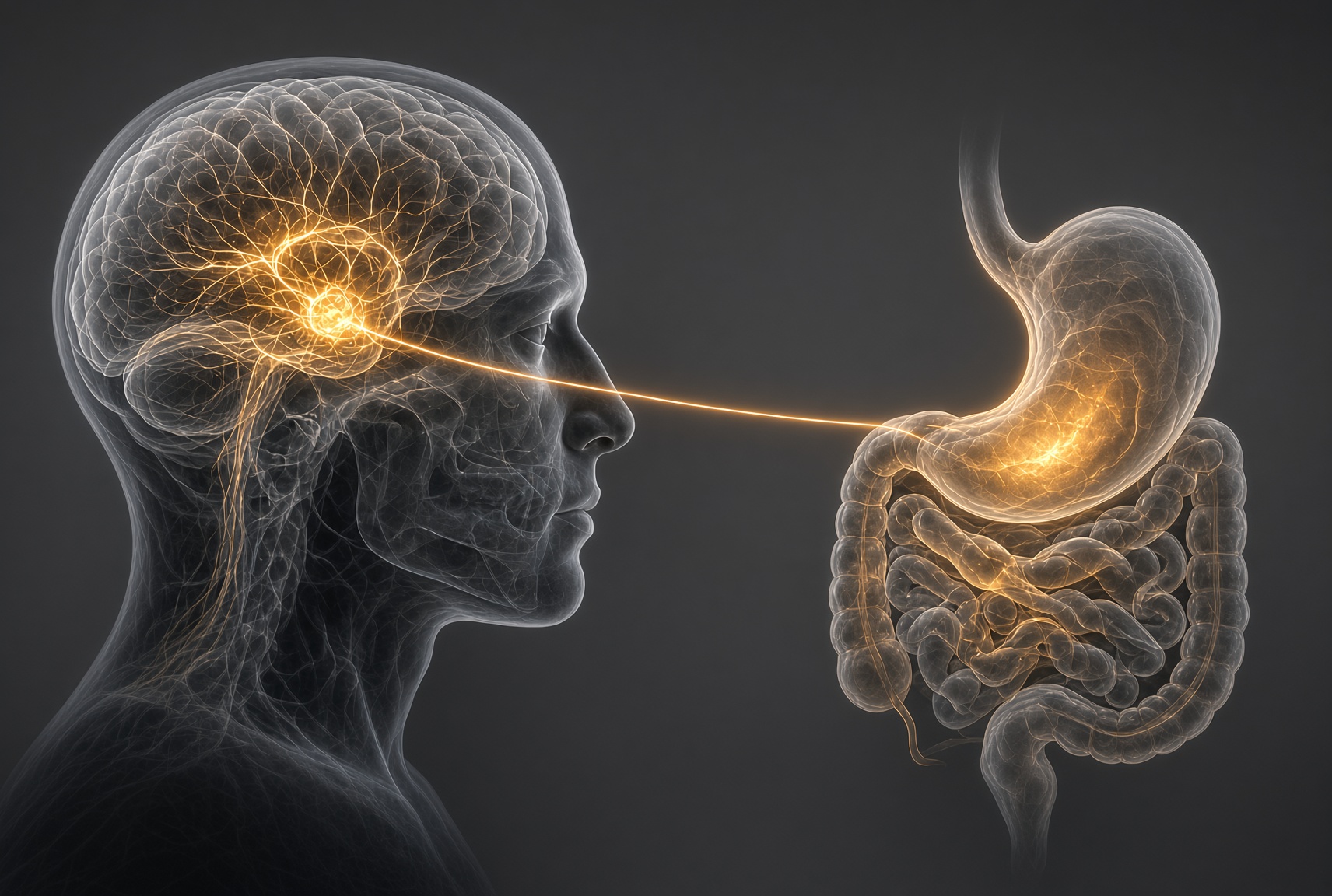
Most people assume these drugs work primarily in the gut.
That’s only half the story—and not even the most important half.
Think of the gut as the messenger and the brain as the boss. GLP-1 drugs grab the boss by the collar.
These drugs activate GLP-1 receptors throughout the brain—particularly within the hypothalamus, which regulates hunger, and the mesolimbic reward system, which helps determine how pleasurable food feels.
They don’t simply reduce hunger.
They change the perceived reward of eating.
That slice of pizza or bag of chips that once lit up your dopamine circuitry like a slot machine jackpot suddenly becomes…meh.
The popular press keeps calling these “appetite drugs,” but that’s like calling testosterone a “muscle drug.” It’s technically true while completely missing the bigger picture. They’re altering motivational circuitry. Appetite is simply the most obvious symptom of that change.
This also explains why some users report losing interest not only in food, but alcohol, gambling, compulsive shopping, and other reward-seeking behaviors.
It’s not magic.
It’s neurochemistry.
On the gut side, these drugs dramatically slow gastric emptying. Food remains in the stomach longer, prolonging mechanical fullness signals traveling back to the brain.
One mechanism reduces desire.
The other prolongs satiety.
Together, they’re a biochemical one-two punch against overeating.
This is sophisticated physiological leverage—not simply appetite suppression.
The Dirty Little Secret
Biology always adapts.
Every receptor system eventually pushes back.
Beta receptors downregulate.
Dopamine systems recalibrate.
Androgen receptors adjust.
GLP-1 receptors are not magical exceptions to those rules.
If chronic receptor stimulation never produced adaptation, nobody would need a second cup of coffee, smokers would still get dizzy from one cigarette, and bodybuilders would keep growing from their first steroid cycle.
Biology doesn’t work that way.
Some users eventually require higher doses—sometimes official titration for obesity versus diabetes, sometimes incomplete response, underdosing, or the system pushing back.
Others notice food noise slowly creeping back despite staying on treatment.
When the drug is discontinued, weight frequently returns—not because the drug “failed,” but because the body evolved powerful mechanisms to defend stored energy.
Leptin still matters.
Ghrelin still matters.
Thyroid output still matters.
Energy expenditure still adapts.
The body has spent hundreds of thousands of years evolving systems that prevent starvation.
It has spent exactly zero years evolving systems designed to help you look good shirtless at a pool party.
Pharmaceutical companies love to talk about efficacy curves.
Evolution cares about survival curves.
Those are two very different conversations.
We’re currently conducting the largest real-world experiment in appetite regulation in human history.
Millions of unpaid participants.
The long-term chapter hasn’t been written yet.
The Muscle-Loss Problem
Here’s the part conveniently omitted from many dramatic before-and-after photos.
When calories plummet, your body doesn’t politely burn only fat.
Think of your body as a company trying to survive bankruptcy. It doesn’t just sell unused office furniture. Eventually it starts selling productive machinery.
Muscle is productive machinery.
Lean-mass loss with these drugs is real. In trials, roughly a quarter to 40 percent of the weight that comes off is lean tissue—similar in proportion to large diet-only losses, not a uniquely catastrophic drug effect. Relative lean mass as a percent of body weight often holds or even improves because fat drops faster.
The actual risk is dropping weight without resistance training and adequate protein, especially if you’re older. Do that and you risk becoming a lighter, weaker, softer version of yourself.
The scale celebrates.
Your metabolism does not.
Weight loss and body recomposition are not the same thing.
Why the Fitness Industry Hates Them
The backlash has been predictable.
And often hypocritical.
Personal trainers.
Nutrition influencers.
Supplement companies.
Many suddenly sound personally offended.
Why?
Because GLP-1 drugs exposed an uncomfortable truth.
Most people don’t fail diets because they’re lazy.
They fail because hunger is an extraordinarily powerful biological drive.
Telling someone struggling with obesity to “just have more discipline” was always an incomplete answer.
GLP-1 drugs didn’t eliminate personal responsibility.
They simply demonstrated that biology matters far more than many people wanted to admit.
Are They Safe?
The common side effects are well known.
Nausea.
Vomiting.
Constipation.
Diarrhea.
Fatigue.
Some people tolerate them beautifully.
Others feel like they swallowed a washing machine full of angry ferrets.
The larger unknown is long-term use.
We’re collecting that data in real time.
Anyone speaking with absolute certainty about ten-year outcomes is either guessing—or selling something.
The Underground Verdict
If Dan Duchaine were still around, he’d probably read the data, shrug, and say:
“They work.”
And he’d be right.
The appetite suppression is real.
The fat loss is real.
The behavioral changes are real.
But he’d also remind everyone of something else.
Every powerful intervention creates new variables.
Nothing this effective comes free.
Every receptor system eventually responds.
Biology always sends a bill.
Sometimes years later.
Do They Actually Fix Obesity?
Here’s the billion-dollar question.
Do these drugs actually fix obesity?
Maybe.
Maybe not.
They unquestionably suppress appetite while you’re taking them.
But obesity isn’t simply a hormone problem.
It’s also influenced by behavior, environment, psychology, food availability, stress, sleep, habit formation, and decades of reinforced decision-making.
No weekly injection can permanently erase all of that.
The drug changes the playing field.
You still have to play the game.
The people who combine GLP-1 therapy with resistance training, high protein intake, healthier habits, and realistic expectations will almost certainly fare better than those waiting for pharmacology alone to rewrite millions of years of evolutionary programming.
So Are GLP-1 Drugs Worth It?
It depends.
Plain and simple:
They’re good for:
- Severely obese people (80–100+ lbs overweight) facing serious health problems like Type 2 diabetes, heart disease, or metabolic syndrome.
- People who need a powerful tool to break years of out-of-control appetite and food noise.
- Those willing to combine the drugs with resistance training, high protein intake, and basic habit work.
They’re not good for:
- Dropping the last 10 pounds before a beach trip.
- People who refuse to lift weights or eat enough protein (you’ll just get smaller and weaker).
- Anyone looking for a permanent fix without addressing why they got fat in the first place.
- Long-term crutch use without understanding the body’s adaptation and potential rebound.
GLP-1 drugs aren’t miracles. They’re not scams either.
They’re powerful biochemical tools. They are highly effective at what they’re actually designed to do — managing Type 2 diabetes blood sugar control and producing substantial, clinically significant weight loss — but they’re still just a tool, not a cure-all.
Use them intelligently — with resistance training, adequate protein, and respect for physiology — and they can be life-changing. Use them carelessly and you’ll simply become a lighter, weaker version of who you were.
Biology is undefeated. Always has been. Always will be.
______________________
Note: This article is an overall summary of how GLP-1 drugs work, their strengths, limitations, and real-world implications. I’m considering writing a deeper follow-up piece that goes much further into the detailed mechanisms — especially the brain and reward system effects. Let me know in the comments if that’s something you’d want to read.
Sources
For readers who want to dig deeper into the science, these are excellent starting points:
- Nature Reviews: The Multifaceted Mechanisms of GLP-1 Receptor Agonists
- Journal of Clinical Investigation (JCI): GLP-1-Based Therapeutics and the Gut-Brain Axis
- National Library of Medicine (PMC): GLP-1 Signaling, Reward Pathways, and Addiction
- UNC Health: Study Examines Lean Muscle Loss During GLP-1 Weight Loss
- Medscape: What We Still Don’t Know About Long-Term GLP-1 Use